
TEMPORARY RELOCATION DUE TO BUILDING WORK RELOCATION ADDRESS: 7 Moor Hill Road, Newry, BT34 2QJ.
Conditions
Medial tibial stress syndrome, commonly known as shin splints, is a painful condition that affects many athletes and runners. It is a common injury that occurs due to overuse or repetitive stress on the shinbone and the surrounding muscles and tendons. In the UK, this condition is particularly prevalent among runners and is often seen in individuals who are new to the sport or those who have recently increased the intensity or frequency of their training.
The primary symptom of medial tibial stress syndrome is pain along the inside of the shinbone, which can range from a dull ache to a sharp, stabbing sensation. The pain is usually worse during or after exercise and can become so severe that it interferes with daily activities. The condition is caused by repeated stress on the muscles and tendons that attach to the shinbone, which can lead to inflammation and pain.
There are several risk factors that can increase the likelihood of developing medial tibial stress syndrome. These include running on hard or uneven surfaces, wearing worn-out or poorly fitting shoes, having flat feet or high arches, and having weak or tight muscles in the legs. Overtraining and inadequate rest can also contribute to the development of this condition.
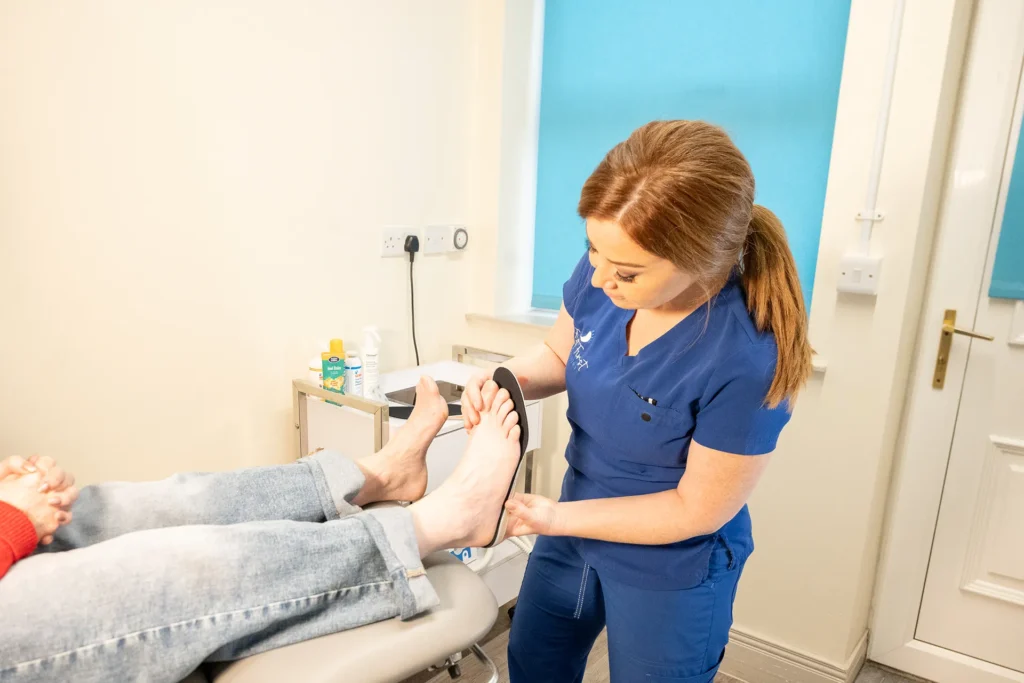
Treatment for medial tibial stress syndrome usually involves rest, ice, and anti-inflammatory medication to reduce pain and swelling. Stretching and loading exercises can also help to strengthen the muscles in the legs and reduce the risk of future injury. In some cases, orthotics or shoe inserts may be recommended to provide additional support and cushioning to the feet and legs.
We and our partners, including Google, use cookies and personal data to analyse traffic and for ads personalisation and measurement. You can accept, reject or choose which cookies to allow. Privacy Policy • Cookie Policy • Terms & Conditions • Google Privacy
We use cookies to help you navigate efficiently and perform certain functions. You can choose which categories to allow below. Cookies categorised as Necessary are always active.
We also use third-party cookies for analytics and advertising. These are only stored with your consent. You can update or withdraw consent at any time via the cookie icon at the bottom-left. This site operates under UK GDPR, the Data Protection Act 2018, and the Privacy and Electronic Communications Regulations (PECR). Cookie Policy • Privacy Policy
Necessary cookies are required for core site features including security, network management, and consent storage.
| Cookie | Duration | Description |
|---|---|---|
hmdg_cookie_consent | 180 days | Stores your cookie consent preferences. |
PHPSESSID | Session | WordPress session identifier. |
wordpress_logged_in_* | Session | WordPress login authentication. |
Functional cookies enable enhanced features such as live chat and remembering preferences.
| Cookie | Duration | Description |
|---|---|---|
wp-settings-* | 1 year | Stores user interface preferences. |
Analytics cookies help us understand visitor behaviour. Controls analytics_storage for Google Analytics 4.
| Cookie | Duration | Description |
|---|---|---|
_ga | 2 years | Google Analytics — distinguishes users. |
_ga_* | 2 years | Google Analytics 4 — session persistence. |
_gid | 24 hours | Google Analytics — distinguishes users. |
_gat | 1 minute | Google Analytics — throttles request rate. |
Performance cookies collect aggregate, anonymous data about site performance.
| Cookie | Duration | Description |
|---|---|---|
_gat_gtag_* | 1 minute | Google Tag Manager — rate throttle. |
Marketing cookies track visits to deliver relevant ads. Controls ad_storage, ad_user_data, and ad_personalization.
| Cookie | Duration | Description |
|---|---|---|
_gcl_au | 90 days | Google Ads — conversion tracking. |
_gcl_aw | 90 days | Google Ads — click attribution. |
_gac_* | 90 days | Google Ads — campaign information. |
IDE | 1 year | Google DoubleClick — ad targeting. |
Powered by HMDG • Cookie Policy